Warehouse cleanup vs dumpster rental comes down to labor, waste type, safety, space, and time. Full-service cleanup is often best when workers must sort, lift, load, and sweep. A dumpster may work for an organized project when staff can safely load items and manage the rental terms.
Table of Contents
- What Is the Difference Between Warehouse Cleanup and Dumpster Rental?
- Which Option Is More Efficient for a Warehouse Cleanup?
- How Do Warehouse Cleanup Costs Compare With Dumpster Rental?
- What Types of Warehouse Materials Can Each Option Handle?
- Which Choice Is Safer for Employees and Warehouse Operations?
- When Should a Business Choose Warehouse Cleanup Services?
- Warehouse Cleanup vs Dumpster Rental: How Do You Decide?
- Frequently Asked Questions
- Key Takeaways
- Conclusion
What Is the Difference Between Warehouse Cleanup and Dumpster Rental?
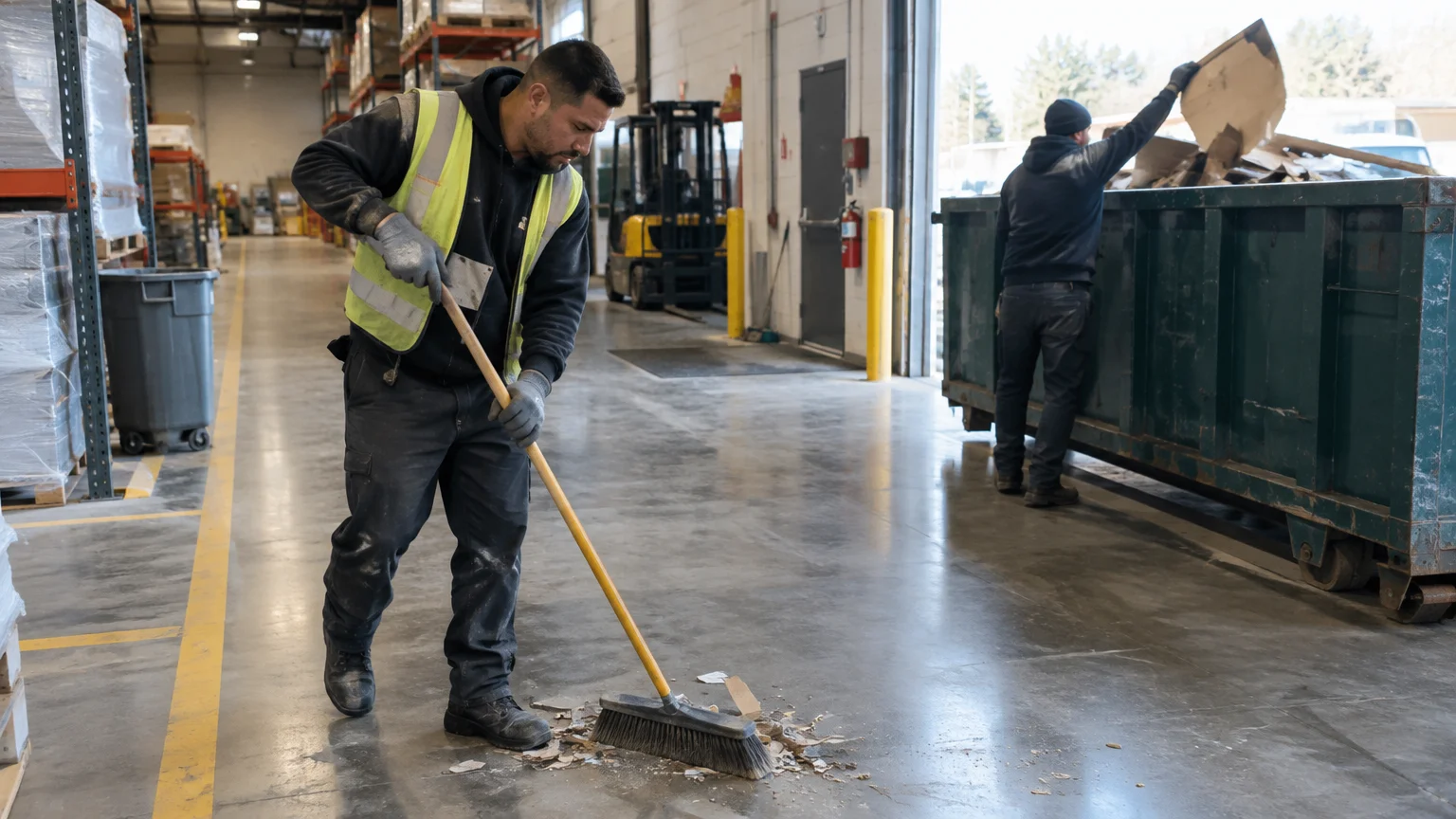
Warehouse cleanup services include the labor needed to remove unwanted items. A crew may sort, lift, carry, load, haul, and sweep the work area. This can help when a warehouse has mixed junk, heavy equipment, old fixtures, and loose debris.
Dumpster rental usually means a container is brought to the property. The business then fills it during an agreed rental period. Staff or hired workers must move the waste to the container and keep banned items out of it.
How warehouse cleanup services typically work
A commercial junk removal crew reviews the materials and access points first. The team may find pallets, shelving, office furniture, appliances, packaging, and building debris. Workers then carry items out, load them, and take accepted materials for disposal or recycling.
Newton Massachusetts Junk Removal can help Newton property owners review the work before they choose an option. The best plan depends on the building layout, truck access, item weight, and deadline. Clear details can also help prevent delays on cleanup day.
How dumpster rental works for commercial properties
A dumpster can work well when waste is already gathered near a clear loading area. It may suit a planned renovation or a slow cleanup where employees have time to load it. The business must still plan for container placement, access, weight limits, and local disposal rules.
A dumpster does not include the labor needed to clear the building. Employees may need to move items across the warehouse, break down large pieces, and sweep the space after loading. Those tasks should be part of the decision.
Which Option Is More Efficient for a Warehouse Cleanup?
Full-service hauling is often more efficient when the warehouse has mixed materials or a short deadline. The business does not need to assign employees to carry heavy items, take apart shelving, and make repeated trips. A crew can focus on removal while the business keeps its normal work moving.
When professional hauling saves time and labor
A full-service crew can handle tasks that a dumpster does not cover. These tasks may include moving items from upper storage areas, taking apart large fixtures, and clearing several rooms. This can help during a lease change, property sale, relocation, or urgent warehouse reset.
Professional help can also reduce planning work. A business does not need to form a loading team or find separate help for large items. Commercial Junk Removal may support offices, warehouses, retail spaces, and other business properties with one planned visit.
This choice may also help when the warehouse has narrow doors, stairs, or a long path to the loading area. Workers bring the labor needed for the job. The business can then spend less time managing each item and more time serving customers or moving stock.
When a dumpster fits an organized cleanup project
A dumpster may be practical when a business has its own staff and a simple waste stream. It can fit a project where most items are sorted and easy to carry. The site also needs enough room for delivery and safe movement around the container.
The business should consider how long loading will take. A container that stays on site may help with a phased project. It may be less useful when the warehouse must reopen quickly or when workers cannot spare many hours for hauling.
A dumpster also requires daily site control. Materials should stay inside the container and should not block doors, walkways, or truck lanes. If the work grows beyond the planned load, the business may need more time or another pickup.
How Do Warehouse Cleanup Costs Compare With Dumpster Rental?
Costs vary because every warehouse has different materials, access needs, labor demands, and disposal rules. Professional warehouse cleanup often reflects the amount and type of material removed, along with the work needed to load it. Dumpster rental pricing may reflect container size, rental time, delivery, pickup, and disposal terms.
What affects the cost of professional warehouse cleanup
A crew may review the total volume, weight, item type, stairs, distance from the truck, and loading conditions. Dense items can need more handling than light boxes or packaging. Shelving, machinery, appliances, and building debris may also need different removal plans.
Businesses should describe the job clearly when requesting service. Photos, access notes, loading dock details, and a list of large items can help the provider understand the work. The actual price depends on the job and is confirmed when the business gets in touch.
The amount of labor is often a key part of the comparison. A large container may seem simple, but staff still need to carry every item. Businesses should count worker hours, lifting needs, sorting time, and final cleanup when reviewing the full project cost.
What affects dumpster rental pricing
Dumpster pricing can change with the container size, rental period, local rules, and material type. Extra charges may apply under the rental agreement for excess weight, banned items, or added days. The business should read all terms before placing a container on site.
A low container price may not show the full labor cost. Employees still need time to carry, load, sort, and clean the area. A business should compare the full workload instead of looking at the container alone.
Newton businesses should also review where the container can sit. A tight loading area, public street, or shared parking lot may add planning steps. Local rules and property limits can affect whether a dumpster is a simple choice.
What Types of Warehouse Materials Can Each Option Handle?
Both options can handle common warehouse waste, but acceptance rules differ. Pallets, cardboard, broken shelving, fixtures, and loose debris may be accepted when prepared correctly. Businesses should confirm special items before work begins.
Pallets, shelving, equipment, and bulk debris
A professional crew may remove wooden pallets, metal racks, display fixtures, desks, chairs, and old equipment. Construction Debris Removal may help when a warehouse project leaves drywall, wood, flooring, or other building waste. Large items may need to be taken apart before loading.
A dumpster may handle similar materials if the rental agreement allows them. Staff may need to break down boxes, flatten materials, and keep heavy waste within the container's limits. Items should not be placed where they block doors, fire paths, loading lanes, or emergency equipment.
Mixed loads need extra care. A pile that includes cardboard, metal, furniture, and building waste may take longer to sort. Full-service hauling can help when the business does not have time or staff for that work.
Items that may require special handling or disposal
Some materials should not go into a standard dumpster. Paint, chemicals, fuel, batteries, refrigerants, electronics, and certain appliances may have special rules. A refrigerator or freezer may contain refrigerant, so businesses should ask who can remove and manage it properly.
Old mattresses, tree branches, and yard waste may also have separate disposal options in Newton and nearby communities. A local provider can explain what it accepts and what needs another solution. Businesses should never mix unknown liquids or harmful products with ordinary warehouse waste.
When workers are unsure about an item, they should set it aside. They can then ask the provider or local waste office for guidance. This simple step can help prevent a rejected load or an unsafe cleanup area.
Which Choice Is Safer for Employees and Warehouse Operations?
Professional cleanup can reduce employee lifting and loading duties. This may lower exposure to sharp edges, unstable stacks, blocked walkways, and heavy objects. A dumpster can also be safe when the site has trained staff, clear rules, and proper equipment.
Reducing lifting, loading, and workplace hazards
Warehouse managers should keep people away from unsafe piles and damaged racks. Workers should not climb into containers or lift items beyond their training. Heavy or awkward objects may need carts, dollies, lifting tools, or a trained removal crew.
A clean work zone also helps protect normal operations. Clear aisles make it easier for staff and equipment to move. Businesses should separate active work areas from cleanup zones and keep doors, exits, and fire equipment open.
Managers should also plan who will direct the work. One person can mark items for removal and answer access questions. This helps avoid accidental removal of useful stock or items that must stay.
Managing traffic, access, and cleanup interruptions
Container placement needs careful planning. A dumpster should not block delivery lanes, customer parking, emergency access, or nearby property. The site should also account for trucks, forklifts, pedestrians, and changing weather.
A professional crew may finish removal in a focused visit, which can limit disruption. Newton Massachusetts Junk Removal can help businesses plan around loading docks, access gates, and work hours. The goal is a cleaner site without creating a new traffic or safety problem.
Businesses should tell the crew about busy delivery times and shared driveways. They should also keep visitors away from the removal area. Good planning helps the cleanup fit the normal workday.
When Should a Business Choose Warehouse Cleanup Services?
A business should consider warehouse cleanup services when the project includes heavy lifting, mixed materials, tight deadlines, or limited staff time. Professional help may also fit a vacant building, property turnover, or large commercial cleanout. It is useful when one team needs to manage removal from start to finish.
Situations that favor professional junk removal
Professional hauling may be a strong fit when:
- The warehouse contains large, heavy, or awkward items.
- The business needs the space cleared by a set date.
- Staff cannot safely lift, sort, or load the material.
- The waste includes several item types with different handling needs.
- The property has limited room for a container.
- The cleanup follows a move, closure, renovation, or lease change.
An office cleanout may be added when warehouse and office areas are being cleared together. Estate Cleanout is a different service for household property and personal belongings. Commercial work focuses on business sites and operating needs.
Professional service may also help property owners prepare a building for a new tenant. Fast removal can make it easier to inspect open areas, repair damage, and plan the next use. It can also help when a former tenant leaves behind mixed items.
Questions to ask before scheduling commercial hauling
A business should ask what items the provider accepts and how the crew handles restricted materials. It should also confirm access needs, preparation steps, timing, and whether the team removes items from inside the building. Clear answers help the property manager prepare the site.
The business should share photos and note stairs, elevators, narrow doors, loading docks, and security rules. This makes planning easier and helps the provider decide whether the job needs special tools or added coordination.
It is also helpful to ask what must be removed before arrival. Some providers need items separated from stock or marked for removal. A short list can help both sides agree on the work before the visit.
Warehouse Cleanup vs Dumpster Rental: How Do You Decide?
The best choice depends on who will do the labor, how quickly the space must be cleared, and what the waste contains. A dumpster may suit a simple project with prepared materials and available staff. Professional cleanup may suit a mixed, heavy, or time-sensitive warehouse job.
A practical decision checklist for business owners
Business owners can compare these points before making a plan:
- List every material that must leave the property.
- Mark heavy, sharp, electrical, liquid, or restricted items.
- Measure the work area and check truck or container access.
- Decide whether employees can load items safely.
- Set the required completion date and work-hour limits.
- Compare the full labor plan with the removal service plan.
This process helps reveal hidden work. A project may look small until staff must move items across the building, take apart racks, or sort mixed debris. A clear list also supports better talks with the chosen provider.
The business should then compare the two work plans. One plan uses staff time and a container. The other uses a removal crew that manages the lifting and hauling. The better choice is the one that fits the building, workers, and deadline.
Planning the next step for a warehouse clearance
The business should prepare a safe path, mark items that stay, and remove private papers before the crew arrives. It should also tell the provider about security checks, dock rules, parking limits, and closed areas. These details can make the visit smoother.
The business should share any local access limits in Newton. This may include narrow streets, shared lots, loading times, or building rules. Good planning can reduce waiting and help the crew work safely.
For businesses in Newton and the wider main Newton area—from Newton Centre and Nonantum to Brookline, Watertown, Needham, Waltham, and nearby communities—local knowledge may help with access and disposal planning. A short site review can show whether full-service hauling or a container plan better fits the property. The final choice should protect staff time, safety, and the business schedule.
Frequently Asked Questions
What is a warehouse cleanout service?
A warehouse cleanout service removes unwanted items from a commercial property. The work may include sorting, lifting, carrying, loading, hauling, and sweeping. It can cover pallets, shelving, furniture, equipment, packaging, and approved debris. The provider should explain which materials it accepts before the scheduled visit.
Is a dumpster better for a small warehouse project?
A dumpster may fit a small project when waste is sorted, easy to load, and placed near the container. The business still needs safe labor, enough time, and clear access. If staff cannot handle heavy or mixed items, professional hauling may be a better choice.
Who takes old freezers from a warehouse?
A commercial junk removal provider may accept old freezers, but the business should ask first. Freezers can contain refrigerant and electrical parts that need special handling. The provider should explain whether it manages those materials or whether another approved service is needed.
Where can a business take tree branches or yard waste?
Businesses should check local transfer stations, compost sites, or town programs for accepted yard waste. Rules can differ by community and material type. A local hauling provider may also explain available options, but branches should not be mixed with restricted warehouse waste without confirmation.
How should a business prepare for commercial junk hauling?
The business should separate items that must stay, clear safe paths, unlock required areas, and share access rules. It should identify liquids, chemicals, appliances, electronics, and other special materials. Photos and a written item list can help the provider plan the removal properly.
Key Takeaways
- Professional hauling includes labor that a dumpster rental does not provide.
- A dumpster can suit a planned project with safe staff loading.
- Mixed, heavy, or restricted materials need careful handling.
- Access, deadlines, labor, and disposal rules affect the best choice.
- A clear item list helps businesses plan warehouse removal.
Conclusion
Warehouse cleanup vs dumpster rental is a choice about labor, safety, access, materials, and time. A dumpster may work for an organized project with staff who can load it safely. Professional warehouse cleanup may be better when the site has heavy items, mixed debris, limited space, or a firm deadline.
Newton Massachusetts Junk Removal helps businesses and property owners plan practical removal work. Newton Massachusetts Junk Removal can review the warehouse needs and help match the project with a suitable removal plan. Contact us to discuss your warehouse clearance.