Roofing debris removal vs dumpster rental depends on the project size, cleanup time, site space, and waste type. A hauling crew clears tear-off waste after the work ends, while a dumpster stays on site for ongoing loading. Small, quick jobs often suit hauling. Longer projects may need a container.
Table of Contents
- What Is the Difference Between Roofing Debris Removal and Dumpster Rental?
- When Does Roofing Debris Removal Make More Sense?
- When Is a Dumpster Rental the Better Choice?
- How Do Roofing Debris Removal and Dumpster Rental Compare in Cost?
- What Roofing Materials Can Each Option Accept?
- Which Option Is Safer and More Convenient for a Job Site?
- How Do You Choose the Right Roofing Cleanup Option?
- Frequently Asked Questions
What Is the Difference Between Roofing Debris Removal and Dumpster Rental?
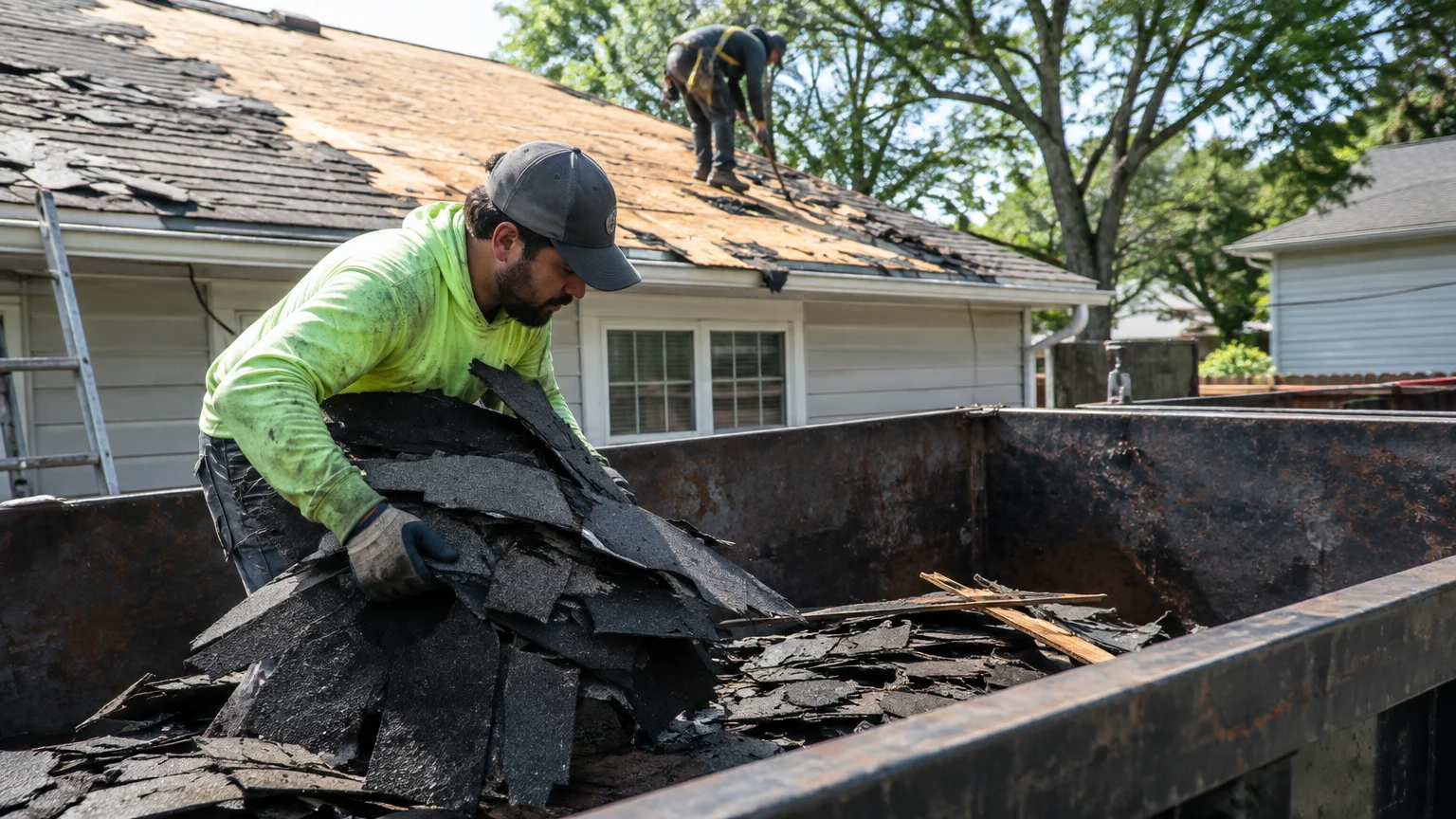
Roofing debris removal uses a crew and truck to collect waste after a roofing job. Dumpster rental provides a container that stays at the property while workers load it. Both options can handle common tear-off waste, but they fit different work plans.
Roofing debris can include asphalt shingles, underlayment, felt paper, flashing, damaged wood, nails, and small pieces of roof decking. Underlayment is the layer placed beneath shingles. It helps protect the roof from water. Roofing crews must contain these materials to protect people, cars, and nearby property.
With removal service, the crew arrives, loads the debris, sweeps the work area, and hauls the load away. This can help a contractor finish without leaving a container in the driveway. It also helps a homeowner who wants the yard and paths cleared soon after the roof work ends.
A dumpster works in another way. The container stays on site for a set period, and workers add debris as the project moves forward. This can suit a large replacement, several buildings, or a remodel that creates waste over many workdays.
The main difference is timing. Removal happens around a planned collection. A dumpster supports loading over time. Newton Massachusetts Junk Removal can help property owners compare both choices by looking at access, waste volume, and the planned finish date.
How each option handles shingles, underlayment, and tear-off waste
Most common roofing waste can go into either option when the provider accepts it. Heavy materials, mixed loads, and unsafe items may need special steps. The provider should know what the roofing crew plans to remove before service begins.
Why project size and cleanup timing matter
A small repair may create only one small pile. A full tear-off can create much more waste in a short time. The right choice keeps debris off the ground without placing a container that does not fit the property.
When Does Roofing Debris Removal Make More Sense?
Roofing debris removal often makes sense when the work ends quickly and the waste is ready at one time. It can suit a small repair, a single-home replacement, or a property with little room for a container.
A hauling crew can collect the pile after the roofers finish. The driveway, lawn, and walkways do not need to hold a container for several days. This may also help when a property manager needs the building ready for tenants soon after the work ends.
On-demand hauling can limit site problems. Workers do not need to plan around a container that blocks a garage or narrows a drive. The crew can also gather loose pieces that moved during the job, such as shingles near a fence or paper beneath shrubs.
This option may suit contractors who handle several short jobs. A contractor can arrange cleanup after each project instead of moving waste between sites. Clear scheduling matters because collection should match the tear-off and final sweep.
Removal service is often a strong choice when speed and a clear property matter most. It can also help owners who cannot place a dumpster on private land. Newton Massachusetts Junk Removal serves homeowners, contractors, and property owners seeking local construction debris removal, including Newton Centre and Nonantum, as well as Brookline, Watertown, Needham, Waltham, and nearby communities.
Projects with limited debris or a fast cleanup deadline
Small roof repairs, shed roof replacements, and one-day tear-offs may not need a container. A pickup can remove the pile after the work is complete. This leaves fewer items exposed to wind, rain, and foot traffic.
How on-demand hauling reduces job site disruption
A hauling crew can work after the roof crew has placed waste in one area. The property may regain normal access sooner. Before service, the owner should move parked cars and clear gates and other obstacles near the debris pile.
When Is a Dumpster Rental the Better Choice?
A dumpster may work better when a roofing project lasts several days or creates waste in stages. It gives the crew one place to load shingles, paper, and other accepted debris as each roof section is removed.
This setup can help with a large roof, several structures, or work joined with siding and interior remodeling. Workers do not need to build a new debris pile each day. Keeping waste in one container can also make the site easier to manage.
Space is important. The container needs a firm place and enough room for delivery and pickup. The owner should check gates, overhead branches, utility lines, slopes, and driveway width before choosing this option.
The rental period matters too. Weather, inspections, deliveries, and crew schedules can change how long the container is useful. The provider should explain loading rules and what happens if the work schedule changes.
A dumpster is not always right for a tight neighborhood or small driveway. It may block access or put extra weight on pavement. Protective boards may help, but the owner should confirm placement details before delivery.
Longer renovation projects with ongoing waste
A container can support steady loading when roof work connects with other construction tasks. It helps when the crew needs waste nearby throughout the job. The team must keep debris below the fill line and away from the container doors.
Space, loading access, and rental-period considerations
The site should have safe access for delivery and pickup. The owner should also check local placement rules, community limits, and permission needs. These steps can prevent delays and help keep neighbors and emergency paths clear.
How Do Roofing Debris Removal and Dumpster Rental Compare in Cost?
The cost of either option depends on the work involved, not one set amount. Main factors include waste volume, material weight, labor, access, disposal rules, travel distance, container time, and the cleanup needed.
Roofing debris removal may suit a smaller pile or one-time cleanup. The service usually includes labor for gathering and loading. That can save the owner from arranging those tasks separately. Hard access, scattered waste, or extra sorting can change the final quote.
A dumpster may suit work where waste arrives over many days. The final amount can depend on container size, rental time, placement needs, and disposal rules. A container that is too small may require another service. A container that is too large may take up needed space.
Material weight also matters. Shingles are dense, and several layers can create a heavy load. Concrete roof tiles, clay tiles, and heavy decking may need different handling from common asphalt shingles. The provider needs accurate details before confirming the job.
The final cost should be confirmed in a quote after the provider reviews the project details. Comparing only the base service can miss labor, access, disposal, and timing needs. The clearest comparison asks what work is included and how the waste will be handled.
What affects the overall cost of each option
Owners should describe the roof size, number of layers, waste type, pile location, access path, and desired cleanup date. Photos may help the provider understand the job. A clear description supports a more useful quote.
How labor, disposal, material weight, and rental time compare
Removal service puts more focus on crew labor and collection time. A dumpster puts more focus on container use, loading time, and disposal. Neither choice is always less costly for every roofing project.
What Roofing Materials Can Each Option Accept?
Both options may accept common roofing waste, but rules vary by provider and disposal site. The owner should ask before mixing materials. This is especially important when a roof contains old layers, treated wood, or unusual products.
Common roofing debris may include asphalt shingles, synthetic underlayment, felt paper, flashing, ridge caps, nails, and small pieces of roof decking. Some providers may also accept clean wood, gutters, vents, and related exterior materials when the load is described first.
Some items need separate handling. These may include asbestos-containing materials, lead-painted parts, chemicals, liquids, propane containers, batteries, and electrical equipment. A roofing crew should stop and ask for guidance if it finds material that may be unsafe.
Roofing material can also mix with other construction waste. Drywall, insulation, carpet, furniture, and yard waste may have different rules. Keeping loads apart can make the cleanup plan safer and easier to review.
Never place hazardous or uncertain material into a container without approval. A homeowner should not break, cut, or move suspected asbestos material. A licensed specialist may need to inspect or remove it.
Commonly handled roofing materials
Most ordinary tear-off waste can be discussed during scheduling. The provider should know whether the load includes one layer or several layers of shingles. It should also know if tile, metal panels, or heavy decking are present.
Materials that may require separate disposal or special handling
When an item is not clearly ordinary roofing waste, keep it apart from the main pile. Ask the provider what to do before loading it. This can prevent rejected material, unsafe handling, and delays.
Which Option Is Safer and More Convenient for a Job Site?
The safer option is the one that contains debris, limits trips, and fits the property layout. Both services can support a safer cleanup when workers use safety gear and follow the roofing contractor's plan.
Loose shingles, nails, paper, and broken wood can cause trips and punctures. Wind can spread them through the yard. Prompt collection reduces the time these hazards remain near driveways, porches, walkways, and doors.
A dumpster keeps waste in one place, but workers still carry debris to it. A hauling crew removes the pile after loading, which may reduce the time the site stays cluttered. Neither option replaces daily sweeping and careful nail collection.
Property protection matters too. Heavy containers can affect driveways, pavers, lawns, and underground features. Trucks and loaders need room to move. The owner should point out soft ground, septic areas, irrigation lines, low branches, and narrow gates before work starts.
For a roof replacement, the contractor should control the active work zone. Homeowners should keep children and pets away. No one should climb into a container or walk through a debris pile.
Reducing trip hazards, nails, dust, and scattered debris
A daily cleanup routine helps even when final hauling happens later. Workers can place waste in a stable pile or approved container. A magnetic nail tool may help collect loose nails, but it does not replace a careful visual check.
Protecting driveways, landscaping, and property access
The placement plan should protect normal access and sensitive surfaces. A hauling crew may collect from a prepared pile, while a dumpster needs delivery clearance. In both cases, the owner should confirm where trucks can safely travel.
How Do You Choose the Right Roofing Cleanup Option?
The right choice depends on waste volume, job length, storage space, and how soon the property must be clear. Contractors and owners can make the choice with a short site review before tear-off begins.
A small, quick project with one main pile often suits removal service. A long project with steady waste may suit a dumpster. A tight driveway, limited parking, or strict access needs may favor scheduled hauling.
Use this checklist before choosing:
- Decide whether debris will arrive at once or over several workdays.
- List the materials, including shingles, tile, metal, wood, and mixed waste.
- Check driveway width, overhead clearance, gates, slopes, and ground strength.
- Decide how soon the property must be clear after roof work.
- Ask which items are accepted and which need separate handling.
- Confirm the collection or rental plan in a written quote.
Some projects may use both options. A dumpster can hold waste during a long remodel, while a hauling crew removes leftover material at the end. This may help when the container cannot stay for final cleanup or when a later work phase creates a smaller pile.
Newton Massachusetts Junk Removal can help contractors and property owners review their roofing cleanup needs. A local provider can discuss access, material types, scheduling, and site conditions before work begins. The goal is a clean, safe property with a plan that fits the project.
When to combine immediate hauling with a planned dumpster
Combining services may make sense when a project has several phases. The dumpster can support ongoing loading, while final hauling removes loose debris from landscaping and access areas. The provider should confirm that both plans allow the materials involved.
What to confirm before the roof tear-off begins
Ask who loads the debris, where the pile or container will sit, what materials are accepted, and when the site will be cleared. Clear answers help the roofing crew work without avoidable delays.
Frequently Asked Questions
Is roofing debris removal better than a dumpster for a small roof repair?
Roofing debris removal is often a better fit for a small repair because the waste can be collected after the work ends. It avoids keeping a container on the property for a longer time. The final choice still depends on access, material weight, pile size, and accepted-material rules.
Can old shingles go into a dumpster?
Many dumpsters accept ordinary asphalt shingles, but rules differ. The owner should say how many layers will be removed and whether the load includes tile, metal, wood, or other materials. Suspected hazardous material should remain separate until a qualified provider gives clear instructions.
How should a homeowner clean up roofing nails?
A homeowner can keep people and pets away, then ask the roofing crew about its final sweep. A magnetic nail tool may help collect loose nails from safe surfaces. The homeowner should not enter an active roof work zone or handle unknown debris without guidance.
Can a hauling crew remove roofing waste from a driveway?
A hauling crew may collect a prepared roofing pile from a driveway when the path is safe and clear. The owner should move vehicles and point out gates, slopes, soft ground, and overhead hazards. The provider should receive details about the pile before collection is set.
Which choice works for a long roof replacement?
A dumpster may work well when waste appears over several days and the site has room for placement. Roofing debris removal may work better when the roof is finished quickly or the property cannot hold a container. The project schedule and site layout should guide the choice.
Key Takeaways
- Roofing debris removal suits fast, one-time cleanup after tear-off work.
- A dumpster suits projects that create waste over several workdays.
- Shingles, tile, wood, and mixed debris may have different handling rules.
- Access, ground conditions, material weight, and timing affect the final quote.
- Both options need safe loading, controlled access, and a careful final sweep.
Conclusion
Roofing debris removal vs dumpster rental is a project planning choice. Fast hauling can clear a small or finished job quickly. A dumpster can support steady loading during a longer project. The best option depends on waste type, site space, access, cleanup timing, and the final quote.
Newton Massachusetts Junk Removal helps property owners and contractors plan construction debris removal. A clear cleanup plan can also help keep Newton properties safe and accessible during roofing work. Contact us to discuss the roofing waste, access conditions, and cleanup schedule before the project begins.